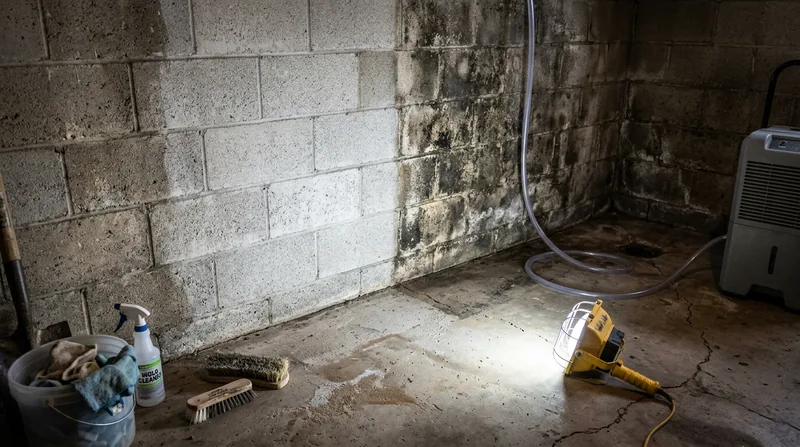




Basement Mold Remediation in Billings: Fix the Moisture, Not Just the Mold
When you search for Basement Mold Remediation in Billings, you are usually standing in a basement that smells like wet earth and looking at dark staining on the lower block. Billings sits on Yellowstone River terraces of gravel, sand and silt, and the benches above town sit on swelling shale clay bedrock that moves with every wet and dry cycle. That geology pushes water and damp air into 1900s brick bungalows on the Southside and Northside just as surely as it does into 1970s tri-levels in the Heights. Spring snowmelt off the Beartooth and Crazy Mountains raises the water table, and summer thunderstorms throw hard runoff off the rimrocks onto lower lots. Mold needs moisture, and in this city the moisture almost always comes from below grade. We remove the growth, treat the surfaces, and then fix the drainage problem that let it grow. Start with a free basement inspection before you spend a dollar on chemicals.
Why Basement Mold Grows So Fast in Billings Homes
Billings gets cold winters with hard freeze-thaw swings and then warm, dry chinook winds that can push moisture vapor through a foundation wall in a matter of days. Older stone and brick basements in Downtown and the Northside were never built with a waterproof membrane, so they wick groundwater and show efflorescence as a white salt bloom on the block. Newer poured walkouts in Shiloh and Rimrock Heights are built into the hillside, and that uphill side collects hydrostatic pressure against the wall. Once the wall stays damp above roughly 60 percent relative humidity, mold growth starts on joists, rim boards, drywall paper and stored cardboard.
- Spring snowmelt raises the water table and pushes dampness through footing joints and wall cracks.
- Summer cloudbursts off the sandstone rimrocks overwhelm grading and window wells on lower lots.
- Poor downspout extensions dump roof water right against the foundation instead of away from it.
- Failed or undersized drain tile leaves the perimeter saturated with nowhere to drain.
- Chinook temperature swings condense moisture on cold concrete and uninsulated rim joists.
A musty smell is the first sign, and it usually shows up before you can see any growth at all. If you smell it, the moisture source is already active.
Key info: A Southside bungalow with a stone foundation and a wet spring is a different job from a 2005 walkout in Rimrock Heights with a failed sump discharge line. Same mold, different fix. We diagnose the moisture path first, every time.
For official guidance on moisture and mold in buildings, the U.S. EPA's mold resources are a solid reference: epa.gov/mold.
How We Remove Mold and Stop It From Coming Back
We do not fog a basement and hand you a bill. Remediation starts with finding the water, because mold returns within weeks if the wall stays damp. Our process pairs containment and surface treatment with the below-grade fix that actually keeps the basement dry, whether that is sealing a wall, correcting drainage, or adding mechanical drying.
- We walk the basement and identify the moisture source: wall seepage, a footing joint, a failed sump pump, or condensation.
- We set up containment with plastic sheeting and negative air pressure so spores do not spread into the living space above.
- We remove porous materials that cannot be cleaned, such as saturated drywall, insulation and cardboard.
- We treat affected framing, joists and block with an antimicrobial and HEPA-vacuum the entire area.
- We correct the moisture path with basement wall sealing, crack injection, drain tile repair, or a dehumidification plan.
- We verify with moisture readings before we close out the job and walk you through what to watch for next spring.
Every job ends with a written moisture plan so you know exactly what to check after the next big rain.
Key info: In Lockwood and Huntley we often find mold growing on the back of drywall against a damp foundation wall, invisible from the finished side. A moisture meter finds it in minutes. Call (406) 500-5258 if you suspect it.
Remediation Approaches We Use in Billings Basements
Not every mold problem calls for the same method. The right approach depends on how far the moisture has spread and what building materials are affected. Here is how we match the method to the job.
| Approach | Description | Best for |
|---|---|---|
| Surface treatment and HEPA cleaning | Antimicrobial treatment on framing and block, followed by HEPA vacuuming of all surfaces. | Light surface growth on joists, rim boards and block walls. |
| Containment and material removal | Sealed plastic containment with negative air, removal of saturated drywall and insulation. | Finished basements where growth has spread behind drywall. |
| Moisture source correction | Crack injection, wall sealing, drain tile repair or sump correction to stop the water. | Any basement with active wall seepage or a wet footing joint. |
| Mechanical drying and ventilation | Dehumidification and air movement to hold basement humidity below the growth threshold. | Basements that stay damp from condensation and closed-in air. |
| Musty smell diagnostics | Moisture mapping and air sampling to locate hidden growth before demolition. | Basements with an odor but no visible growth. |
Basement Mold Remediation Cost in Billings: What to Expect
Most Billings basement mold jobs start around $1,500, and that figure covers a contained treatment of a defined area plus the moisture correction that keeps it from returning. From there, the number moves with the size of the affected area, whether finished drywall has to come out, and how much drainage work the foundation needs. A small rim-joist treatment in a Heights ranch is a very different ticket from a full finished basement in a 1960s split-level with a failed footing drain.
- Square footage of affected wall, joist and ceiling area drives the labor and material line.
- Finished versus unfinished space changes whether drywall removal and rebuild are in scope.
- The moisture fix itself (crack injection, wall sealing, drain tile repair, sump work) is often the larger share.
- Access matters: a low stone foundation in a Downtown bungalow takes longer to work in than a clean poured wall.
- Emergency calls after a spring flood or sump failure carry a premium for fast response.
Get two or three written estimates and compare what each one includes for moisture correction, not just the mold treatment line. Our full pricing breakdown lives on the pricing page.
Hiring a Basement Mold Remediation Contractor Near Me in Billings
Mold remediation and the waterproofing work that supports it are two different trades, and you want a contractor who understands both. Ask whether the company is licensed and insured, whether they carry liability and workers' compensation coverage, and whether they will put the moisture correction scope in writing. A company that only treats surfaces will leave you with the same problem next spring.
- Confirm licensed and insured status and ask for a certificate before work begins.
- Get at least two or three estimates and compare the moisture correction scope, not just the mold line.
- Ask for local references from Billings, Laurel or Lockwood jobs you can call.
- Check whether structural foundation repair or drainage alterations need a permit from the local building department, since rules vary by jurisdiction.
- Understand any HOA requirements before exterior drainage changes or discharge line routing.
If a contractor will not explain how they will keep the basement dry after treatment, keep looking. Reach us through the contact page or call (406) 500-5258.
What to Do Right Now If You Smell Mold
If the musty smell is strong or you see visible growth, stop storing cardboard and fabric in the damp area and keep the basement ventilated until we inspect. Do not paint over moldy block, because the paint traps moisture and the growth returns behind it. Call Billings Waterproofing at (406) 500-5258 and we will map the moisture, treat the growth, and fix the source so the basement stays dry through the next snowmelt.
Basement Mold Remediation in Billings: Pricing Guide
| Service | Price | Details |
|---|---|---|
| Surface treatment and HEPA cleaning | Starting at $1,500 | Covers contained treatment of framing, joists and block plus full HEPA vacuuming of the affected area. |
| Containment and material removal | Starting at $2,200 | Includes sealed containment, negative air, and removal of saturated drywall and insulation in finished basements. |
| Full basement remediation with moisture fix | On estimate | Scope depends on affected square footage, drainage repair needed, and access to stone or early block walls. |
| Emergency response after flooding or sump failure | On estimate | Fast call-out carries a premium; pricing depends on water volume and how quickly drying can begin. |
| Travel | Included | in Billings and surrounding areas, no separate call-out or mileage fee |
| Estimate | Free | Response within 24h at (406) 500-5258, no obligation to book |
Indicative pricing, the exact cost depends on square footage, finish, and site access. Free personalized estimate within 24h at (406) 500-5258.


