



Foundation Crack Repair in Billings: What the Ground Under Your House Is Doing
When you need Foundation Crack Repair in Billings, the crack itself is usually the last chapter of a longer story. This city sits on two very different soils. The river terraces hold gravel, sand and silt that drain fast and move with the water table. The benches above sit on swelling shale clay bedrock that takes on moisture and pushes back. A hairline crack in a 1950s ranch in the Heights and a stair-step crack in a 1920s brick bungalow on the Southside are not the same repair, even if they look alike from the basement floor.
We inspect the crack, read the wall, and match the method to the movement. Sometimes that is a clean epoxy injection. Sometimes it is polyurethane and a hard look at the drainage. We tell you which, and why. Start with a free basement inspection if you want the full picture before any work is quoted.
Why Cracks Open in Billings Foundations and What They Signal
Spring snowmelt off the Beartooth and Crazy Mountains raises the Yellowstone and lifts the groundwater under the lower lots. Summer thunderstorms then dump hard runoff off the sandstone rimrocks onto the streets and yards below. Add the freeze-thaw swings of a high-plains winter and the warm, dry chinook winds that pull moisture back out of the soil, and you get a foundation that is being worked from both sides all year.
- Vertical cracks in poured walls usually follow a shrinkage or settlement line and often take epoxy injection cleanly.
- Stair-step cracks in brick or block walls point to differential movement and need a structural read before sealing.
- Horizontal cracks, especially with a wall that bows inward, mean soil pressure is winning and simple injection is not the answer.
- White powdery efflorescence on the wall face tells you water has been moving through the masonry and drying on the inside.
- Cracks that weep after rain or during snowmelt are tied to hydrostatic pressure and drainage, not just to the concrete.
Reading those signals correctly is the difference between a repair that holds and a patch that fails by the next spring.
Key info: A 1960s split-level in Lockwood with a stair-step crack in the block wall and damp carpet after a June storm is a drainage and wall-stability question. A 2005 poured walkout in Rimrock Heights with one clean vertical crack is usually an injection job. Same city, different repair.
Montana does not license general contractors at the state level, so it pays to check local registration and ask for proof of insurance before any structural foundation work begins. You can verify business registration through the Montana Secretary of State.
How We Diagnose and Repair a Foundation Crack in Billings
We do not sell one method to every homeowner. The first hour on site is spent finding out what the wall is doing and why, because a crack that is actively moving will laugh at a tube of sealant. Here is the sequence we follow on a typical Billings call.
- We walk the basement and the exterior grade, noting wall material, crack pattern, moisture, and where downspouts and window wells discharge.
- We check for bowing wall movement with a straightedge and plumb line, since that changes the repair category entirely.
- We map the crack width and depth, then decide between epoxy injection, polyurethane injection, or a structural repair.
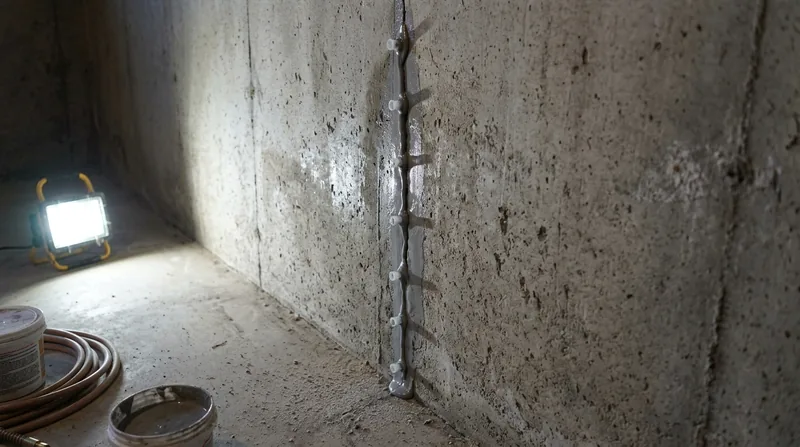
- We drill and set injection ports along the crack at the specified spacing and flush the crack clean.
- We inject the resin from the bottom port up until it reaches the next port, sealing the full depth of the wall.
- We remove the ports, patch the surface, and correct the grading or downspout extension that fed the crack in the first place.
If the inspection shows the crack is a symptom of water pressure rather than a structural fault, we say so and point you to the right fix instead of injecting a wall that will crack again.
Key info: On a 1940s Northside bungalow with a stone foundation, we often find the crack is really a mortar joint that has washed out. Repointing and sealing that joint is a smaller job than the homeowner expected, and we tell them so. On a 1980s tri-level in the Heights with a wet wall after every melt, the crack is usually the least of it and an interior drain tile system is the honest recommendation.
Repair Methods We Use and When Each One Fits
Each method solves a different problem. The table below is the short version of how we choose, based on wall type, crack width and whether the wall is moving.
| Approach | Description | Best for |
|---|---|---|
| Epoxy injection | Structural resin injected under pressure that bonds the crack faces back together. | Non-moving vertical or diagonal cracks in poured walls. |
| Polyurethane injection | Flexible foam resin that fills the crack and stays pliable as the wall moves. | Active leaks and cracks that shift with the seasons. |
| Carbon fiber straps | Straps bonded to the wall to stop inward bowing and hold the wall line. | Bowing block walls under shale clay pressure. |
| Wall anchors | Anchors driven into stable soil outside and tied through the wall. | Walls that have moved and need to be pulled back. |
| Drainage correction | Grading, downspout extensions and drain tile work to relieve hydrostatic pressure. | Cracks that keep weeping after rain or snowmelt. |
When a wall has real movement, injection alone is not a repair. That is the point where we talk about bowing wall repair and the structural options that actually address the cause.
Foundation Crack Repair Cost in Billings: What to Expect
Most single-crack injection work in this market starts at From $450, which covers a typical poured-wall vertical crack with ports, resin, cleanup and a surface patch. That number moves for real reasons, not sales pressure. Crack length and width, wall thickness, whether the wall is poured or block, access to the crack, and whether the repair needs structural hardware all change the total.
A tight hairline in a 1990s ranch is a different job from a 10-foot stair-step crack in a 1920s brick wall that also needs the grade corrected outside. We price the work we can see and explain the work we cannot verify until the wall is opened or the exterior is exposed. Getting two or three local estimates is smart, and so is asking each contractor what method they plan to use and why.
For a fuller breakdown of how we build a number, see our pricing overview. It explains what drives the range so you can compare bids apples to apples.
Foundation Crack Repair Near Me: How to Vette a Contractor Around Billings
You will get a dozen names from a search, and most of them will look the same online. The questions that separate a real below-grade specialist from a general handyman are simple, and you should ask them before anyone drills a hole in your wall. A contractor who cannot explain the difference between epoxy and polyurethane is not the one you want diagnosing a moving wall.
Ask for proof of licensing and insurance, and actually read the certificate. Ask how many foundation crack repairs they have done in Yellowstone County this year. Ask whether they will put the repair method in writing. Ask what they will do if the crack reopens, and get the warranty terms on paper, transferable if you sell. If the work involves structural repair or altered drainage, ask who pulls the permit and confirm the requirement with the local building department, since rules vary by jurisdiction.
Word of mouth still carries weight here. Neighbors in Laurel and Lockwood will tell you straight about a crew that showed up, cleaned up, and came back when a crack leaked again. When you are ready to talk, contact us and we will set a time to look at the wall.
Key info: If a bid comes in far below the others with no stated method, no written warranty, and no mention of drainage, treat that as a warning. A cheap patch that fails after the next snowmelt costs more than the repair done once.
Foundation Crack Repair in Billings: Pricing Guide
| Service | Price | Details |
|---|---|---|
| Single crack epoxy injection | Starting at $450 | Covers one typical poured-wall vertical crack with ports, resin, cleanup and surface patch. |
| Polyurethane injection for active leaks | Starting at $550 | Flexible resin for cracks that weep and move; price rises with crack length and depth. |
| Block or brick wall crack repair | Starting at $750 | Stair-step and mortar joint repair takes longer; access and wall thickness move the number. |
| Structural repair with carbon fiber or anchors | On estimate | Bowing or shifted walls need an on-site structural read before any figure is given. |
| Estimate | Free | On-site inspection and written method at (406) 500-5258, no obligation to book. |
Indicative pricing, the exact cost depends on square footage, finish, and site access. Free personalized estimate within 24h at (406) 500-5258.


