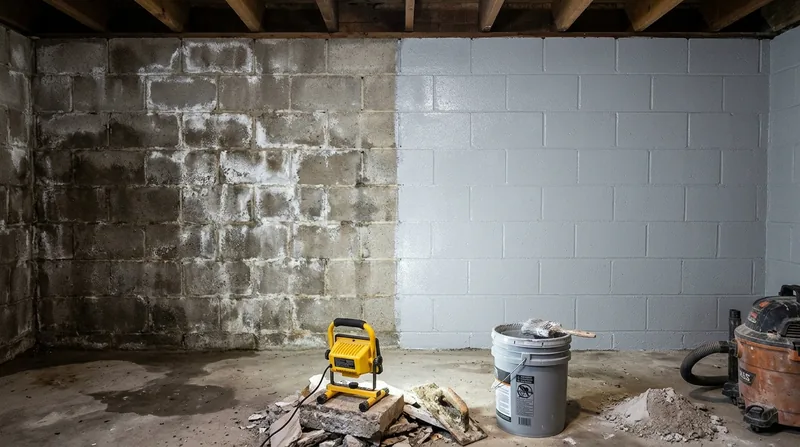




Basement Wall Sealing in Billings: Stop the Damp Before It Spreads
Billings sits on Yellowstone River terraces of gravel, sand, and silt, and the benches above town rest on swelling shale clay bedrock that moves with every wet and dry cycle. That geology is why so many basements in the Heights, the Northside, and the older streets off Grand Avenue come up damp, chalky, and smelling of wet concrete each spring. Basement Wall Sealing in Billings starts with an honest look at what is actually pushing moisture through your wall, not a bucket of sealer slapped on a wall that is already under hydrostatic pressure. We prep the surface, strip efflorescence, and apply the right penetrating or membrane product for your wall type, whether that is 1920s brick, early block, or poured concrete. If your seepage is really a drainage problem, we tell you that too. You can read more about our full approach on the basement waterproofing page.
Why Damp Basement Walls Are a Billings Problem, Not a Cosmetic One
Spring snowmelt off the Beartooth and Crazy Mountains raises the river and the water table, and summer thunderstorms send hard runoff off the sandstone rimrocks onto lower lots. Add cold winters with freeze-thaw swings and warm chinook winds that dry the ground fast, and the shale clay under the benches keeps cracking and shifting. That is the recipe for wall seepage, white efflorescence bloom, and a musty basement smell that shows up every June.
- Older brick and stone foundations in Downtown and the Southside wick groundwater through mortar joints and porous masonry.
- 1950s and 1960s ranches across the Heights often have hairline cracks and failing parging behind finished walls.
- Poured walkout basements in Shiloh and Rimrock Heights take water at the cold joint where the slab meets the wall.
- Homes on the lower terraces see hydrostatic pressure rise fast after a hard rain, and no surface sealer holds that back.
Sealing is the right first step for dampness and minor seepage, but it is not a fix for an active water problem, and we say so on the first visit.
Key info: A homeowner in Lockwood called us after three summers of white powder on the basement wall. The wall was damp but not leaking. A penetrating sealer and a downspout extension solved it for a fraction of what an interior drain would have cost. A house two streets over had standing water at the wall base and needed an interior perimeter drain instead. Same symptom, different fix.
For official guidance on when foundation and drainage work needs a permit, check the City of Billings building department before you schedule work.
How We Seal a Basement Wall in Billings, Step by Step
Every job starts with a walk of the basement and the outside grade. We look for efflorescence pattern, crack direction, cold joints, and how the lot drains. Then we choose the method that matches the wall and the moisture source, because a 1920s brick wall and a 2010 poured wall in Rimrock Heights do not take the same product.
- We inspect the wall, the footing area, and the exterior grade to identify whether the moisture is capillary damp or hydrostatic pressure.
- We wire-brush and wash the wall to remove efflorescence, old paint, and loose parging so the sealer bonds to sound masonry.
- We fill non-structural cracks and cold joints before any coating goes on, so the sealer is not bridging a moving gap.
- We apply a penetrating sealer on porous block and brick, or a flexible waterproof membrane on poured walls that see minor movement.
- We correct grade and downspout extensions on the outside so water sheds away from the footing instead of soaking in at the wall.
- We leave you a written note on what was sealed and what to watch, including when a crack calls for epoxy or polyurethane injection instead.
If the inspection turns up a real drainage failure, we move the conversation to an interior drain tile system rather than selling you a sealer that cannot hold.
Key info: On a 1958 brick ranch in the Heights, the wall was chalky from efflorescence but dry to the touch except after heavy rain. We sealed it with a penetrating product and extended two downspouts eight feet out. No excavation, no drain tile, and the wall has stayed dry through two melt seasons.
Sealing Methods We Use and When Each One Fits
The right method depends on wall material, moisture source, and whether the wall is moving. Here is how the options compare for Billings homes.
| Approach | Description | Best for |
|---|---|---|
| Penetrating sealer | Soaks into block and brick pores and reacts to block capillary damp without a surface film. | Damp masonry walls with efflorescence but no standing water |
| Flexible membrane | Roll-on or spray coating that bridges hairline cracks and cold joints on poured walls. | Poured walkout basements in Shiloh and Rimrock Heights |
| Crack injection | Epoxy or polyurethane pushed through injection ports to fill a crack full depth. | Active seepage through a defined vertical or diagonal crack |
| Parging repair | Replaces failed mortar coat on old stone and brick walls before sealing. | Downtown and Southside homes with crumbling parging |
| Exterior membrane and dimple board | Waterproof membrane plus drainage board applied to the outside face of the wall. | Walls with hydrostatic pressure and open excavation access |
We match the method to the wall, not the other way around, and we tell you when sealing alone will not solve the problem.
Basement Wall Sealing Cost in Billings: What to Expect
Most basement wall sealing work in Billings starts from $1,500, and that figure covers a typical single-wall or partial-perimeter job with surface prep, efflorescence removal, and a quality sealer. The number moves up with wall length, wall material, and how much prep the wall needs. A chalky 1930s brick wall in the Southside takes more labor than a clean poured wall in the Heights.
Three factors drive the price more than anything else: square footage of wall to be sealed, whether cracks need injection before sealing, and whether the exterior grade or downspouts need correction at the same time. Access matters too, since a finished basement wall requires more care around framing and insulation. We give you a written scope, and we recommend getting two or three estimates so you can compare what is actually included, not just the bottom line. Our pricing overview lays out the full range.
Hiring a Basement Wall Sealing Contractor Near Me in Billings
Ask three things before you sign: is the contractor licensed and insured, will they put the scope in writing, and can they explain why they chose one method over another. A sealer salesman who never mentions hydrostatic pressure is a red flag. So is a bid that promises a dry basement without looking at the outside grade.
- Confirm the contractor carries liability and workers comp coverage, and ask for a certificate.
- Get two or three written estimates that list prep work, product, and any crack injection separately.
- Ask for local references from Billings or Laurel homes with the same wall type as yours.
- Check with the City of Billings building department on permit thresholds for any drainage or structural work.
- Read the warranty terms and confirm they are transferable if you sell the home.
We are happy to walk you through our scope and answer questions before you commit to anything. Reach us through the contact page or call (406) 500-5258.
Basement Wall Sealing in Billings: Pricing Guide
| Service | Price | Details |
|---|---|---|
| Single wall sealing | Starting at $1,500 | Includes surface prep, efflorescence removal, and one penetrating or membrane coat on a single wall. |
| Partial perimeter sealing | Starting at $2,400 | Covers two to three walls, with crack filling and cold joint treatment included before sealing. |
| Full perimeter with crack injection | Starting at $3,800 | Full basement perimeter, active cracks injected with epoxy or polyurethane, then sealed and finished. |
| Complex or large-scale job | On estimate | Finished walls, heavy parging failure, or exterior membrane work need an on-site look before pricing. |
| Travel | Included | In Billings and surrounding areas, no separate call-out or mileage fee. |
| Estimate | Free | Response within 24h at (406) 500-5258, no obligation to book. |
Indicative pricing, the exact cost depends on square footage, finish, and site access. Free personalized estimate within 24h at (406) 500-5258.


