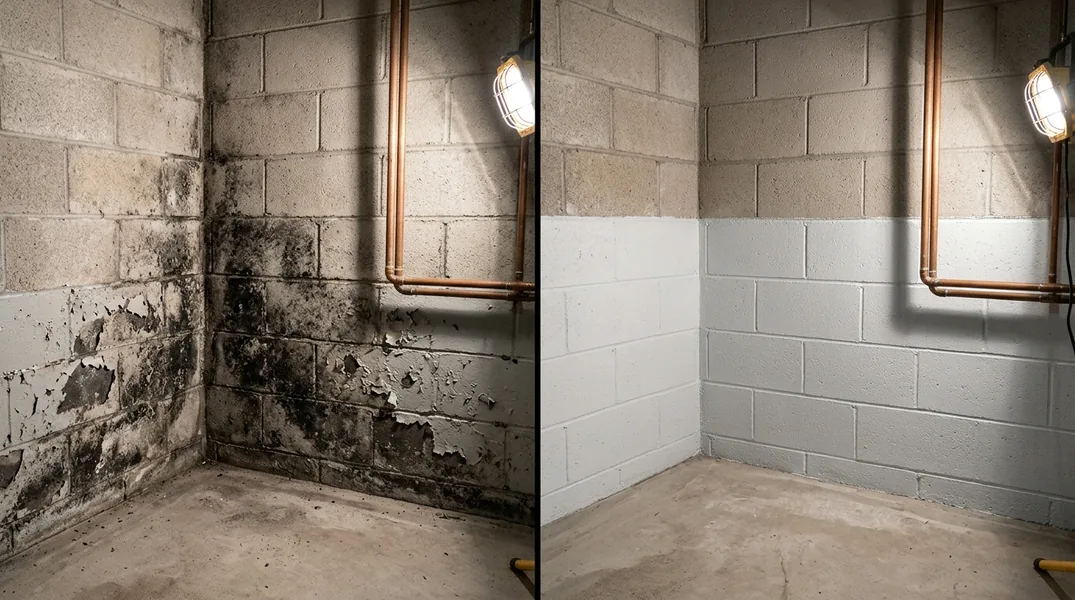
Why Billings Basements Face Unique Waterproofing Challenges
Homes in Billings sit on some of the most interesting geology in Montana. Much of the city is built on Yellowstone terrace deposits, layered gravels and sands left behind by ancient river systems. These soils drain quickly in dry weather, but when snowmelt or heavy spring rain saturates the ground, water moves fast and finds every crack, seam, and cold joint in a foundation. That is why basement waterproofing here is less about stopping a slow seep and more about managing sudden, concentrated water pressure.
Add in the freeze-thaw cycle that defines our winters, and you get soils that expand, contract, and shift against foundation walls year after year. Many Billings homes also have older poured concrete or block foundations that were never designed with modern drainage in mind. Understanding whether your home needs an interior system, an exterior approach, or a combination starts with understanding what the ground around your foundation is doing. A local contractor who has worked on Yellowstone terrace basement after Yellowstone terrace basement will recognize the warning signs faster than a generic national franchise.
Interior vs Exterior Waterproofing: How the Two Approaches Actually Work
The core difference between interior vs exterior waterproofing comes down to where the water is managed. An Interior Drain Tile System is installed along the inside perimeter of the basement footing. It intercepts water that has already entered the soil around the foundation and channels it to a sump pump, which moves it away from the house. This approach does not try to stop water from reaching the wall. Instead, it gives that water a controlled path out before it can pool on your floor or soak into stored belongings.
Exterior Basement Waterproofing takes the opposite tack. It involves excavating down to the footing, applying a waterproof membrane or coating to the exterior wall, and installing drain tile and gravel at the base. The goal is to keep water from ever touching the foundation in the first place. Exterior work is more invasive and typically more expensive because of the excavation, but it can be the right call when walls are bowing, when the water table is high, or when you are already planning major landscaping or foundation repairs. The drain tile vs exterior membrane debate is really a debate about prevention versus management.
Which Method Fits a Billings Home? Soil, Climate, and Foundation Clues
For most Billings homeowners dealing with a damp basement, minor seepage at the wall-floor joint, or water during spring runoff, an interior system is the practical first choice. It costs less, requires no digging up of patios or landscaping, and can be installed year-round, which matters when winter arrives early. On the Yellowstone terrace soils common on the city's south and west sides, interior drain tile paired with a reliable sump pump handles the fast-moving groundwater that shows up during snowmelt without tearing up a mature yard.
Exterior waterproofing earns its higher price tag in specific situations. If your foundation walls show horizontal cracks, bowing, or signs of serious hydrostatic pressure, keeping water out of the soil is often the only way to protect the structural integrity of the wall. Homes in older neighborhoods near the Yellowstone River corridor, or properties in nearby communities like Laurel and Red Lodge where grades and runoff patterns differ, may also benefit from an exterior membrane if the lot slopes toward the house. A thorough inspection should always come before a recommendation, because the right answer is based on your foundation, not a sales script.
Basement Waterproofing Cost in Billings: What to Budget
Homeowners researching pricing usually find that interior systems are the more budget-friendly option. Because there is no excavation, labor and material costs stay lower, and the work is contained inside the basement. Exterior waterproofing costs more because it involves digging out the foundation, disposing of soil, and restoring landscaping, driveways, or decks afterward. The exact numbers depend on linear footage, foundation condition, sump pump requirements, and access to the perimeter.
It is worth remembering that waterproofing is one of those projects where the cheapest bid can become the most expensive decision. A cut-rate exterior membrane applied without proper drainage or surface prep will fail, and a sump pump sized incorrectly for your water volume will burn out during the first big spring melt. Ask for a written scope of work, a clear explanation of what is and is not included, and a company that stands behind the installation. For a realistic assessment of your home, call (406) 500-5258 or request a free estimate from a local crew that knows these soils.
Drain Tile vs Exterior Membrane: Common Myths and Practical Advice
One persistent myth is that exterior waterproofing is always superior because it stops water at the source. In reality, exterior membranes have a lifespan, and once they degrade, the only fix is another excavation. Interior drain tile, by contrast, is serviceable and can be upgraded with a better pump or additional drainage without digging up the yard. Another myth is that interior systems just hide the problem. Done correctly, an interior system relieves hydrostatic pressure at the footing, which is exactly where pressure causes the most damage, and it directs water to a discharge point away from the home.
Practical advice for Billings homeowners: fix grading and downspouts first, since water dumped next to the foundation defeats any system. Then get a professional assessment of the foundation itself. If the walls are sound and the issue is seepage, interior drainage is usually the sensible investment. If the walls are moving or the water volume is extreme, exterior work may be necessary. Some homes need both, and a good contractor will tell you when a phased approach makes sense rather than pushing the biggest job on day one.
Basement Waterproofing Near Me: When to Call a Billings Pro
If you are searching for basement waterproofing near me in the Billings area, the timing question matters. Call a professional when you see water staining on basement walls, efflorescence (the white powdery residue), musty odors that return after cleaning, or visible cracks that seem to widen over a season. These are early signals that water is already finding a path, and addressing them before spring runoff is far less disruptive than waiting for a flooded finished basement.
Billings Waterproofing serves homeowners across Billings and the surrounding communities, including Hardin. Whether your home needs an interior drain tile system, exterior waterproofing, or a full Basement Waterproofing plan that addresses Foundation Waterproofing as well, the first step is a straightforward inspection. Reach out at (406) 500-5258 or request a free estimate online, and get a recommendation built around your home, your soil, and your budget rather than a one-size-fits-all package.
Looking for a professional basement waterproofing contractor in Billings? Billings Waterproofing responds fast for all your basement waterproofing needs.
Get a Free QuoteOur services: Basement Waterproofing · Interior Drain Tile System · Exterior Basement Waterproofing