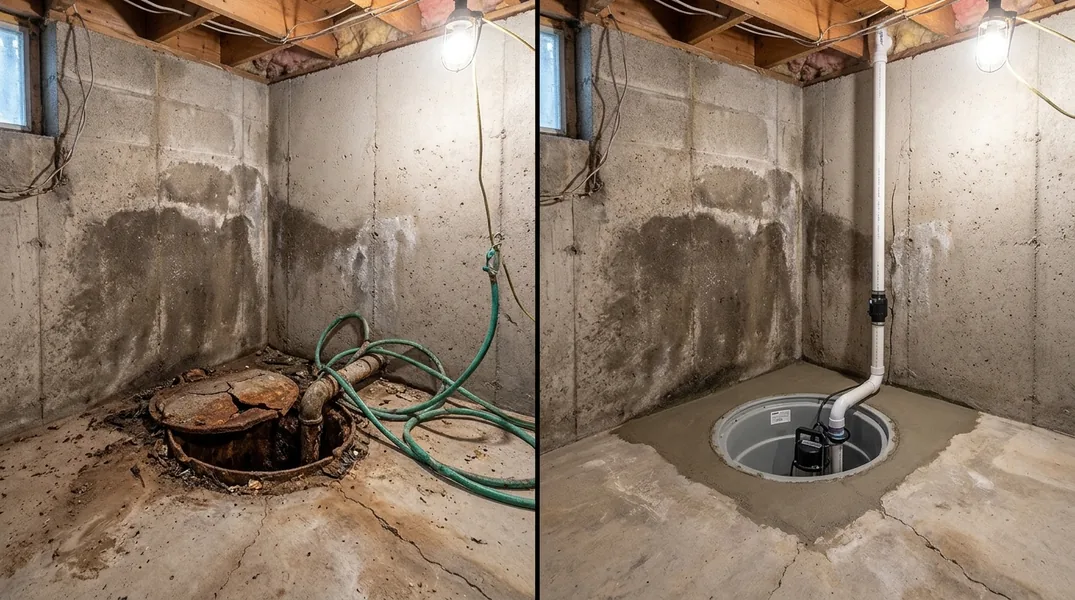
Why Spring Runoff Is a Serious Threat to Billings Basements
Spring in the Yellowstone Valley is a season of dramatic change. The snowpack in the mountains and foothills begins to melt, and all of that water has to go somewhere. In Billings, the combination of rapid snowmelt, spring rain, and the region's clay-heavy soils creates a perfect storm for basement flooding. The ground becomes saturated, and water that would normally drain away instead finds its way toward your foundation.
For homeowners, the sump pump is the first and most important line of defense. It sits in the lowest part of your basement or crawlspace, collecting water that seeps in and pumping it safely away from the house. But here is the catch: a sump pump that has sat idle all winter is not guaranteed to work when you need it most. According to the Insurance Institute for Business and Home Safety, water damage from failed sump pumps is one of the most common and costly homeowner claims. A few hours of maintenance now can save you thousands of dollars in repairs later.
The Sump Pump Maintenance Checklist Every Homeowner Should Follow
Start by inspecting the pump itself. Unplug it, remove the cover, and look for debris, rust, or signs of wear. Clean the intake screen and the pit so that water can flow freely. Next, test the float switch by lifting it manually. You should hear the pump kick on immediately. If it hesitates, hums without pumping, or does not start at all, that is a red flag. A pump that runs but moves very little water may have a clogged impeller or a failing motor.
The Basement Waterproofing system in your home is only as good as its weakest component, and the pricing of a replacement pump is far lower than the cost of water damage. Check the discharge line for kinks, ice, or blockages, and make sure it directs water at least six to ten feet away from the foundation. If your discharge line runs underground, verify that the outlet is clear and that the ground around it slopes away from the house. Finally, pour a bucket of water into the pit to confirm the pump cycles on and off correctly.
Don't Skip the Sump Pump Check Valve
The sump pump check valve is a small but critical piece of equipment. It is a one-way valve installed on the discharge line that prevents water from flowing back into the pit after the pump shuts off. Without a working check valve, every cycle sends water back down the pipe, forcing the pump to work harder and run more often. Over time, this shortens the pump's lifespan and can lead to overheating.
During your spring maintenance, inspect the check valve for mineral buildup or cracking. If it is more than a few years old or if you hear water gurgling back into the pit after the pump stops, replace it. This is an inexpensive part that makes a big difference in reliability. While you are at it, consider adding a secondary check valve if your discharge line is long or has multiple elbows. Properly installed valves keep your system efficient and reduce the risk of spring runoff basement flooding.
Battery Backup Sump Pump: Your Safety Net During Storm Basement Flooding
Spring storms in Montana are notorious for knocking out power. When the electricity goes out, a standard sump pump becomes useless, and that is exactly when you need it most. A battery backup sump pump runs on a charged battery and automatically takes over when the primary pump fails or the power is interrupted. It is an essential upgrade for any home in the Yellowstone Valley, especially if you have finished basement space or valuable belongings stored below grade.
Maintaining a battery backup is straightforward. Test the battery every few months by unplugging the primary pump and simulating a power failure. Check the water level in the battery if it is a wet-cell type, and clean the terminals if you see corrosion. Most batteries need replacement every three to five years. If you are unsure about the condition of your backup system, a professional inspection is a wise investment. Storm basement flooding often happens at night or during severe weather, and a backup pump gives you peace of mind when you cannot be home to monitor the system.
When to Call a Professional for Sump Pump Help in Billings
Some maintenance tasks are easy for a handy homeowner, but others require an expert eye. If your pump is older than seven to ten years, runs constantly, or has a history of failing during heavy rain, it is time to call a professional. The same goes for homes with a Interior Drain Tile System or an Exterior Basement Waterproofing setup, where the sump pump is integrated with a larger drainage network. A qualified technician can assess the entire system, not just the pump, and identify weak points before they become emergencies.
If you live in Laurel, Red Lodge, or Hardin, the same principles apply. Local conditions vary, but the need for a reliable sump pump does not. Foundation Waterproofing professionals can also check for signs of water intrusion around the foundation and recommend repairs before spring runoff arrives. Do not wait until the water is rising. Schedule a free estimate with Billings Waterproofing by calling (406) 500-5258. Our team serves the entire Yellowstone Valley and can help you get your basement ready for the thaw.
Looking for a professional basement waterproofing contractor in Billings? Billings Waterproofing responds fast for all your basement waterproofing needs.
Get a Free QuoteOur services: Basement Waterproofing · Interior Drain Tile System · Exterior Basement Waterproofing